Close-up and strolling formats
Strolling vs Table Magic: Choose Your Setup
Compare strolling vs table magic by guest attention, movement, and room setup. Find a close-up format that fits the social flow of your event.
In this article
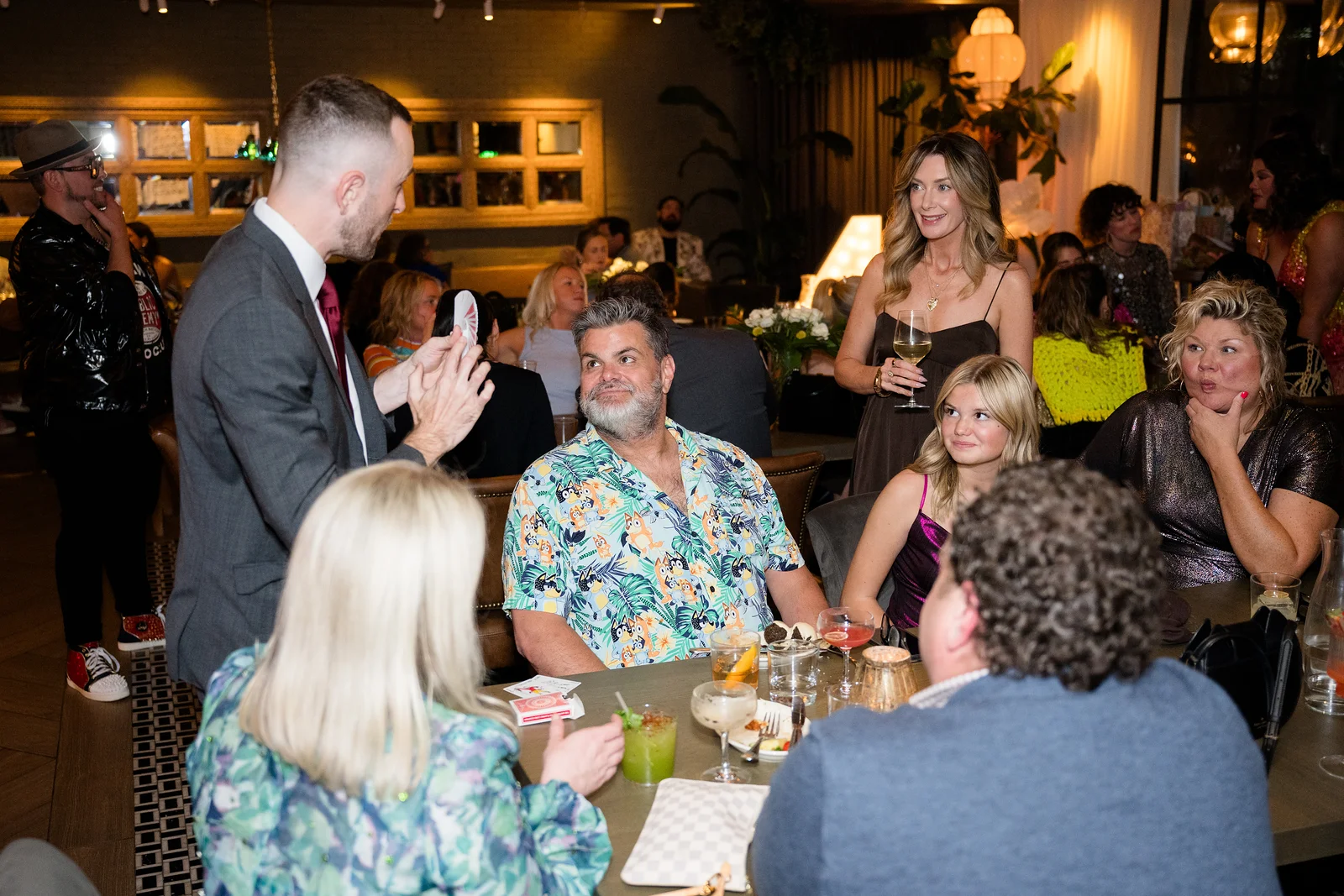
The choice between strolling vs table magic comes down to who moves and how guests give their attention. With strolling magic, I move between groups while the reception continues. At a fixed close-up table, guests come to one place for a more focused experience. Both can feel personal. Choose the setup that fits the social rhythm you want, then make sure the room and schedule support it.
Strolling vs table magic: define the two formats
Table magic can mean different things in an event inquiry. Some people mean a magician visiting guests at their dinner tables. Others mean a dedicated table where a small audience gathers for a formal close-up show. This comparison uses that second meaning.
In strolling magic, the group already exists and I join it for an interaction. People can return to conversation afterward, and the room keeps moving. The experience takes shape around the reception rather than asking the entire reception to change shape.
At a fixed table, the performance has a home. Guests gather to give it more sustained attention, and the arrangement can support a deeper close-up experience. I have used that format later in an evening after moving among groups.
Neither description tells you how long to book. First decide how you want participation to work. Timing becomes easier to discuss once the format has a clear purpose.
Choose strolling when conversation should keep moving
A reception often includes several activities at once. Some guests want a drink, some are introducing friends, and others are catching up with someone they rarely see. Strolling magic can join that pattern through smaller moments of attention.
I would lean toward this approach when you want entertainment to reach people where they are gathering. It is useful to have several comfortable places for groups to watch and enough access to move between them.
For example, a host could plan strolling magic during an open social period before everyone moves into a separate dining room. Guests would not need to choose a show time or leave the reception to find the performance.
The tradeoff is that different groups experience the magic at different moments. If your central goal is one shared audience experience, moving among groups may not be the right organizing idea. My close-up magic overview gives more context for those personal interactions.
Choose a table when guests can settle into watching
A fixed close-up table works differently because approaching it signals a decision to watch. The host should make the location easy to find and give the audience a comfortable way to gather.
I would consider it when guests have an open part of the evening and can stay with the performance without worrying about missing a toast, collecting dinner, or moving to another room. A settled audience allows a different pace from brief encounters around a reception.
The position of the table matters. A spare corner beside a loud speaker may be available without being suitable. Think about sightlines, seating, lighting, and the route people will use to approach or leave.
For example, a planner could place a close-up table within the social space but away from its busiest traffic. Guests should feel connected to the party while being able to pay attention. Confirm the actual furniture and audience arrangement with me before committing to a layout.
Compare the demands on guests and hosts
The right comparison is practical, rather than a ranking of which format is more impressive.
- Guest movement: Strolling brings the performer to groups. A fixed table asks guests to come over.
- Attention: Strolling creates shorter social pauses. A formal table experience asks guests to settle into watching.
- Room planning: Strolling needs usable gathering pockets. A table needs one suitable location and a clear way to approach it.
- Host communication: Strolling may be discovered naturally. A table often benefits from a simple announcement or direction.
- Audience distribution: Strolling spreads interactions through the room. A table concentrates them in one place.
None of these differences makes one setup right for every event. A small gathering may naturally become one audience even if the host initially imagined strolling. A larger reception may need a plan for how guests learn about a fixed table and when they can comfortably visit it.
Combine formats only when each has a purpose
You can discuss using strolling magic first and a formal close-up table later. I have worked with that sequence, moving among groups before offering a more focused experience at a table.
The useful question is what changes between the two parts. Perhaps guests arrive and mingle early, then have a relaxed social period after the formalities. Those different attention patterns can give each format a distinct job.
Avoid adding a second format simply because it appears to fill an empty line on the schedule. You still need a suitable table location, a clear transition, and guests who have time to watch. A coordinator or DJ may be able to let people know where the later experience is happening.
This remains close-up entertainment. A formal table show should not be treated as a stage show with a smaller piece of furniture. If you are considering a room-wide performance, my close-up versus stage guide addresses that separate choice.
Describe the experience you want in your inquiry
You do not need to know the industry term before contacting me. Describe what guests will be doing and the kind of attention you hope to create.
Useful language might be: “We want people to keep mingling while you move between groups,” or “We would like guests to gather for a focused close-up experience later in the evening.” Those descriptions tell me more than simply requesting table magic.
Include the guest count, room arrangement, and parts of the schedule when people are free to watch. Mention if the audience is likely to remain seated or spread across several spaces. These details help us test the idea against the actual event.
If you are weighing strolling vs table magic, tell me about your gathering. I can discuss how the two approaches fit the evening you are planning and what the selected setup would require.
Frequently asked questions
Is table magic the same as performing during dinner?
Not in this comparison. Here, table magic means a dedicated close-up performance table. I generally recommend avoiding active dinner service because eating and watching compete for attention. A formal close-up experience needs its own suitable place in the evening.
Does a fixed table require every guest to watch?
It does not have to. Guests may come to the performance as an optional part of the event, depending on the agreed plan. Tell me if you want one audience to gather together, because that changes how we organize the experience.
Can a small party still have strolling magic?
We can discuss it, but small groups often gather into one audience when the magic begins. In that situation, a formal close-up show may feel more natural. The useful decision is how your actual guests will gather, rather than choosing a format by its name.
Where to next
See the work, or read more notes.