Close-up and strolling formats
Close-Up Magic vs. Stage Show: Which Fits Your Event?
Close-up magic or a stage show? Compare how each format feels, what a stage show needs from the room, typical show lengths, and when to book both.
In this article
Choose close-up magic when you want guests to experience the magic personally, a few inches away, in small groups. Choose a stage show when you want the whole room to watch one performance together. Many corporate events use both: strolling magic during cocktail hour, then a stage show after dinner.
Close-up magic vs. stage show: the real difference
Close-up magic and a stage show ask for different kinds of attention.
With close-up, the experience happens near you, sometimes four or five inches from your face or right inside your hands. You can see the small details, take part in a moment and share the reaction with the people standing beside you.
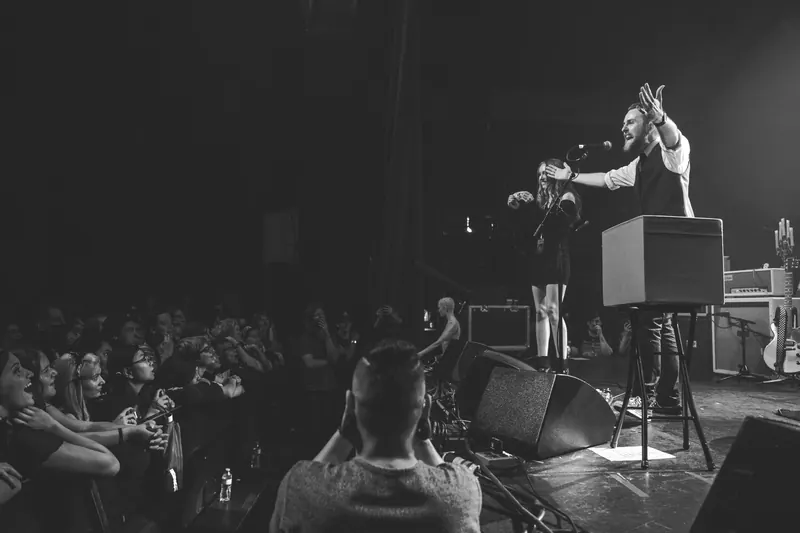
With a stage show, the whole room follows one performance together. Stage magic always gets a great response, but close-up is usually people's favorite because of how personal it is.
The tradeoff is reach. On stage I can address everybody at once, while working close-up takes a lot more time to get through the entire crowd. Choosing between them starts with how you want the event to feel.
Strolling magic moves with the guests
For strolling magic, I move from group to group while people mingle. There's no need to gather the entire room for every performance. That flexibility makes it a natural option for cocktail hours and receptions.
It still needs a suitable setting. Guests should be able to hear a conversation, and there should be room to gather without blocking service or another activity. A packed dance floor with loud music asks something very different from a relaxed drinks reception.
Strolling doesn't need a stage. A lot of my Nashville events have a live musician in the room, so I lean on more visual magic. On a loud trade show floor, I'll use a sound system so everyone around the booth can hear me.
If the goal is personal interaction across the room, strolling gives us a way to work toward it. Here's more on what a close-up magician does at an event.
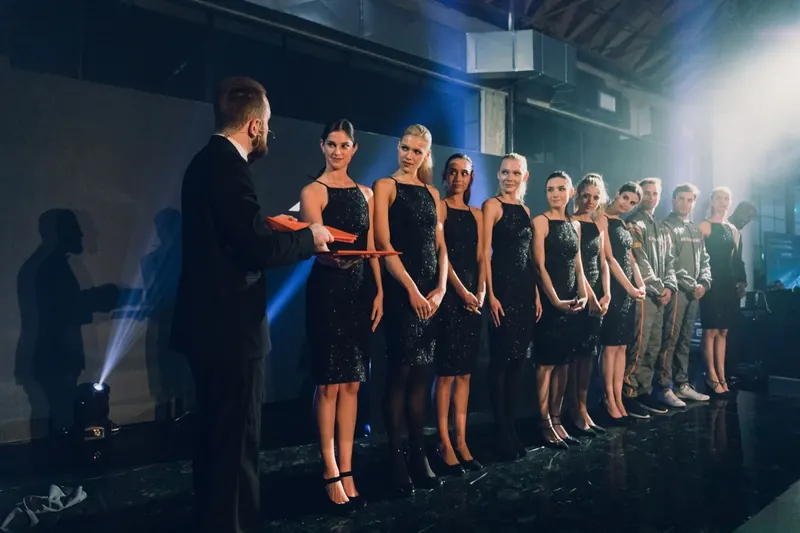
A stage show brings the room together
A stage performance has a shared beginning, middle and ending. Everyone watches the same moments, and reactions can build across the audience.
The event needs to make space for that attention. Consider the performance area, sight lines, sound and lighting, along with how the show will be introduced. Guests shouldn't have to choose between watching and listening to a separate announcement.
Length depends on the flow of the event. I've performed stage sets from 10 or 15 minutes up to 30 or 45, and as a rough guide I treat 45 minutes as the maximum. You want guests to see plenty of magic without the show overwhelming the evening.
After dinner, or between defined parts of a program, is usually the right place for it. That's why a stage magician is such a natural fit for after-dinner entertainment at a company event.
What a stage magician needs from the room
For larger shows, these are my usual planning points, as a rough guide:
- A platform: about 10 by 10 feet is a good minimum.
- A headset microphone: a double-ear headset lets me move around and handle the magic while I'm talking.
- Clear sight lines: guests should be right up near the stage with a clear view of it.
- No dance floor in the gap: I'd rather perform in front of the dance floor than across it, because distance takes away the personal interaction.
- Camera projection for big audiences: above roughly 400 to 500 people, I highly recommend a camera team projecting the show onto screens. Award shows often have this already for their speakers.
The venue or event planner usually arranges the sound equipment. For a straightforward stage show, I only need a quick sound check and a little time to set up.
Seated close-up offers another option
Close-up doesn't always mean strolling. In a formal seated show, guests gather around a table and watch together from nearby. These usually run about 20 minutes, and guests get a more in-depth experience than a quick strolling moment.
That creates an intimate experience with the structure of a show. It's particularly worth discussing when the group is small. With fewer than about 15 guests, everyone gathers the moment the magic starts anyway, so a formal show is the more comfortable fit.
At larger events, it can sit alongside strolling, with a table set up toward the end of the evening.
The seating matters. Simply placing a table at one end of a long room won't automatically give everyone a close-up experience.
When to combine close-up magic and a stage show
Some events benefit from strolling during cocktails and a shared show later. Guests first encounter the magic in small groups, then return to it as part of the evening's program.
I do this all the time at corporate events: about an hour of strolling magic during the cocktail hour, then a 30 to 45 minute show after dinner and before the awards. I don't perform during the meal itself, because when people are eating, the magic takes a back seat.
The combination should serve the schedule, with time for dinner, speeches and conversation between performances. Here's how I plan corporate events in Nashville, and you can watch both formats in my performance videos.
If you're deciding what fits your wedding, corporate event or private party, send me the date, venue, guest count and rough timeline. Tell me whether you picture people moving around or settling in together. That's where the choice starts.
Frequently asked questions
Does a close-up magician need a stage or sound system?
Not for strolling. I move from group to group and perform at conversational distance, so there's no stage involved. The exception is a loud trade show floor, where I'll use a sound system so everyone at the booth can hear. A stage show is different and needs a platform and a headset microphone.
How long is a stage magic show?
I've performed stage sets from 10 or 15 minutes up to about 45. As a rough guide, I treat 45 minutes as the maximum, so guests see plenty of magic without the show taking over the evening. At corporate events, a 30 to 45 minute show after dinner and before the awards is a common fit.
Is close-up or a stage show better for a small group?
For fewer than about 15 guests, I usually recommend a formal show rather than strolling. Everyone gathers as soon as the magic starts, so a seated close-up show around one table works better. You keep the personal feel of close-up with the structure of a show. Strolling starts to make sense at around 20 to 30 guests.
Where to next
See the work, or read more notes.