Close-up and strolling formats
How Many Magicians Do I Need? Plan Guest Coverage
Asking how many magicians do I need? Plan around guest distribution, available time, and the depth of interaction you want at your event.
In this article
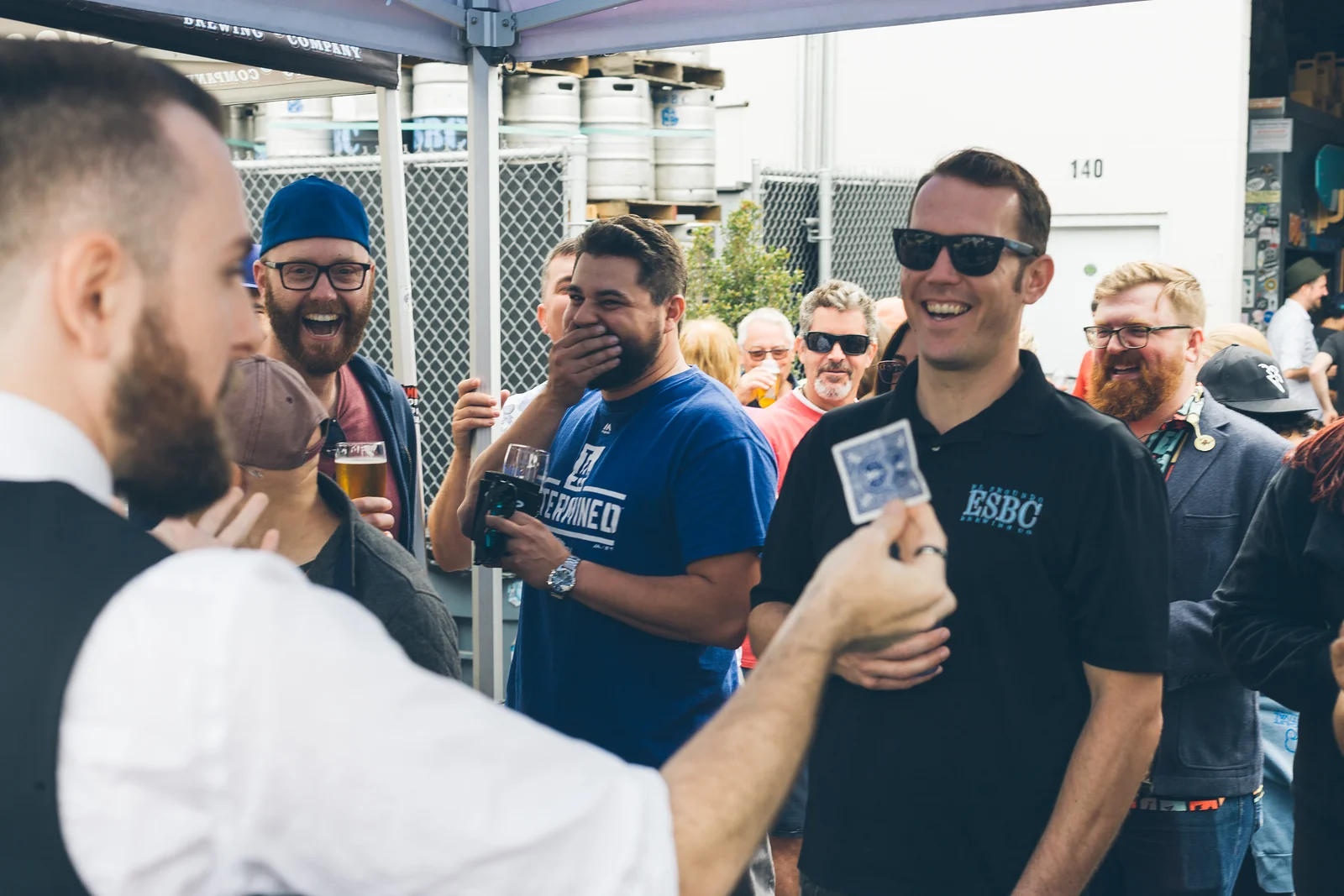
“How many magicians do I need?” is a coverage question, and guest count is only the beginning. I also need to know where people will gather, when they are available, and how much interaction you want each group to have. One open room with a relaxed social period is different from several separate spaces with a short window. I sometimes bring in trusted colleagues for larger events, but the right plan starts with those details.
How many magicians do I need for this room?
Start by describing the event as a set of places and moments. Attendance alone does not show whether guests will share a room, arrive in waves, or gather separately.
For example, a planner could expect the same overall attendance at two events. At one, guests mingle together before dinner. At the other, different groups attend concurrent receptions on separate floors. The second event creates a coverage challenge even before anyone discusses performance length.
I would ask which spaces need entertainment, how connected they feel, and when guests will be in each one. Doors, stairs, and a busy registration area all affect how easy it is to move between groups.
This is why I avoid treating a guest-per-hour ratio as the answer. A ratio can hide the very conditions that determine what guests will actually experience. Begin with the room and the schedule, then work toward a realistic staffing conversation.
Decide what coverage means to your host team
Different hosts mean different things when they say they want everyone included. One might want magic to be visible throughout the reception. Another might hope each guest has an opportunity for a personal interaction. Those are different goals.
Discuss the desired experience before choosing a number of performers. I prefer having enough time to give groups a more personal experience, rather than treating each interaction as a stop to check off.
You might frame the goal in one of these ways:
- Offer optional magic in several active reception areas.
- Give groups room for a fuller interaction during a relaxed gathering.
- Keep entertainment present during staggered arrivals.
- Bring the whole audience together for one shared performance.
The last goal may suggest a stage format instead of adding strolling performers. My close-up versus stage comparison explains that distinction. Adding people is one planning option, rather than the automatic solution to every coverage concern.
Count usable attention, not the entire event
An event may run for an evening while offering a much smaller window for strolling magic. Dinner, speeches, presentations, and room changes reduce the time when guests are comfortably available.
I like to see the flow of the event because that reveals the real opportunity. A long booking window does not help if most of it overlaps with activities that require guests to focus elsewhere.
Mark the schedule in three simple categories: open social time, focused program time, and transitions. Then identify where entertainment belongs. Be realistic about arrivals, too. If many guests arrive near the end of the reception, the early portion cannot be counted as an equal opportunity to reach them.
For example, a planner could discover that moving a welcome announcement slightly earlier creates a clearer social period afterward. That is a scheduling discussion to have before assuming a second performer is necessary. The goal is usable interaction time, supported by the actual run of show.
Look for simultaneous demand across the event
Multiple performers become worth discussing when the event asks for activity in different places at the same time. One person cannot be with a group in one room and another group elsewhere simultaneously.
That may occur across separate reception spaces, during a short shared break, or when attendance is large relative to the available social window. The decision still depends on the desired depth of interaction and the way guests circulate.
I have brought in trusted colleagues when an event calls for more performers. That is something to discuss for the particular date and scope, rather than assume is available automatically.
If several performers are part of the plan, clarify how they would share the room. Possible planning questions include which areas need attention first, how movement between spaces works, and who communicates schedule changes. A coordinated approach is more useful than simply adding names without deciding what each person is there to do.
Compare the options before increasing the count
There may be several ways to address a coverage concern. They create different guest experiences, so choose according to your priorities.
Give one performer a more useful window. This can make sense when guests are together but the original schedule is fragmented. It requires a real opportunity in the program, not time borrowed from dinner or speeches.
Discuss additional performers. This may suit simultaneous activity across rooms or a concentrated reception. Availability and the proposed arrangement need confirmation.
Consider a shared show. If the goal is for the whole audience to experience entertainment together, gathering everyone may be more suitable than attempting individual coverage.
Narrow the entertainment area. A clearly planned reception location can bring guests together, provided it serves the event’s hospitality and access needs.
My strolling performance length guide gives more context on timing. Here, the important point is that time, format, and performer count work together. Change one and the other decisions deserve another look.
Send a coverage brief with your inquiry
A useful coverage brief can be short. Give me the expected attendance, spaces in use, arrival pattern, and the social windows in the schedule. Then explain what you want guests to experience.
Mention any groups that will be present only during part of the event. Include a floor plan if it shows separate rooms or a difficult route between areas. Flag known constraints and leave room to discuss the rest.
Also name the person coordinating the event on the day. If a reception starts late or a room becomes unavailable, there should be a clear way to communicate that change.
To work through how many magicians you need, send me the event outline. We can discuss a plan based on the gathering itself, with the performer arrangement and availability confirmed before you rely on them.
Frequently asked questions
Is there a standard number of guests per magician?
I would not use a universal ratio to decide your event plan. Group size, available time, room layout, and the desired interaction all matter. A head count helps start the conversation, but it does not establish what one performer can accomplish in every setting.
Can you arrange additional magicians?
I sometimes bring in trusted colleagues for events that need more performers. We would need to discuss the date, setting, and proposed arrangement. Treat that as an option to confirm, rather than an automatic inclusion or an assurance of availability.
Will more performers mean every guest sees magic?
More performers can address simultaneous demand, but guests may arrive late, choose other activities, or prefer to keep talking. Plan for a sensible opportunity to participate and clear expectations. A guest-by-guest outcome should not be assumed from performer count alone.
Where to next
See the work, or read more notes.