Corporate events
Awards Ceremony Entertainment: Protect the Timing
Plan awards ceremony entertainment around recognition, speaker cues, dinner service, and stage production so each part gets its own attention.
In this article
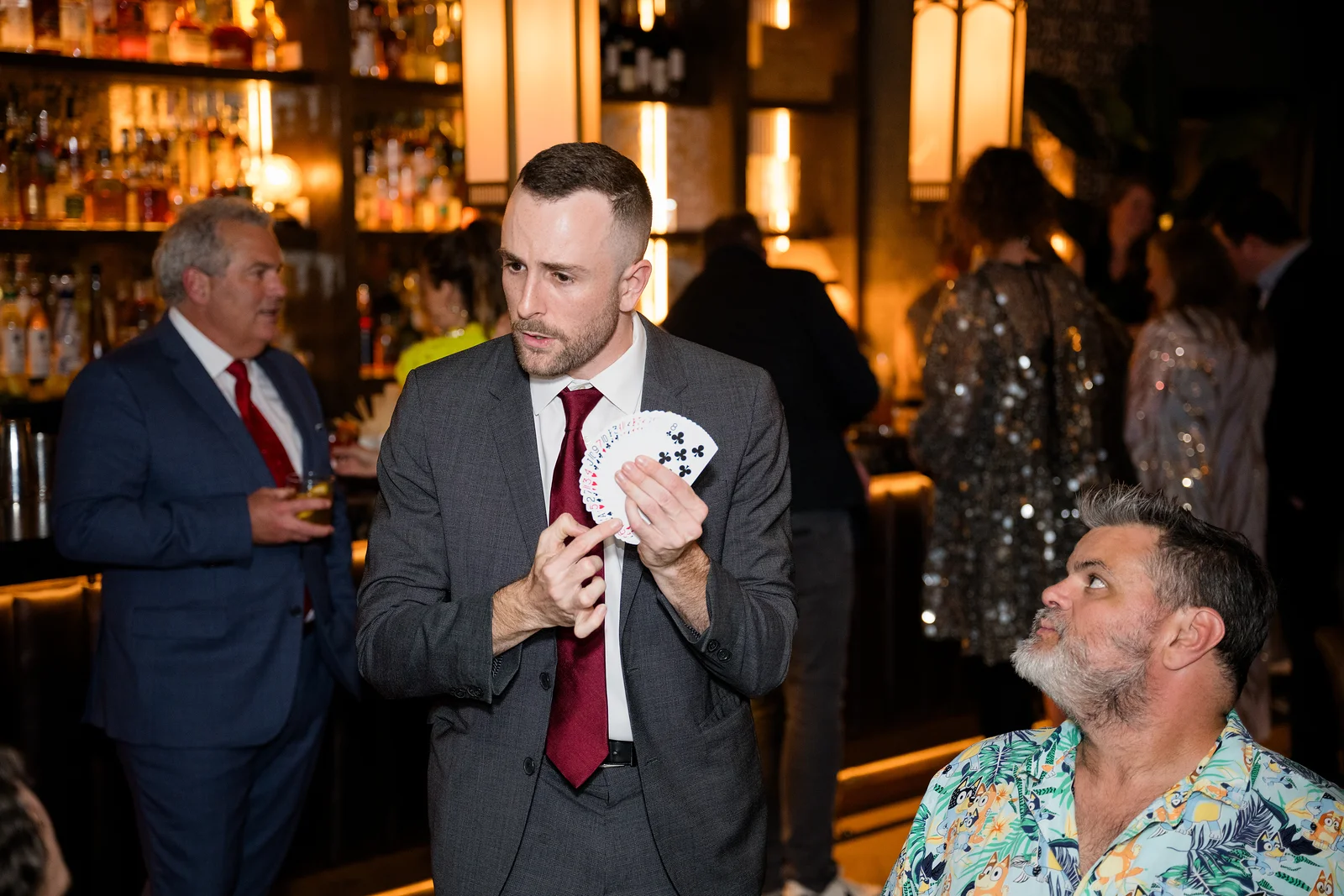
Awards ceremony entertainment should have a defined place in the program, with a clear beginning, ending, and handoff to the next speaker. I often discuss a shared show after dinner and before awards, but the right order depends on your event. Protect the recognition moments, confirm production needs, and agree on who communicates timing changes. A show should fit the ceremony’s plan rather than become an interruption between names.
Place awards ceremony entertainment around the recognition
Start with the award presentations themselves. How many blocks are planned? Are speeches part of each presentation? Do recipients walk to a stage and pause for photographs? Those details determine where the program needs room.
Then consider the entertainment’s role. A focused show after dinner can give the audience a shared experience before formal recognition begins. Strolling magic may belong in an earlier reception. The two approaches ask for different kinds of attention.
I have performed shared shows after dinner and before awards at corporate events. That sequence is an option to discuss, not a rule for every ceremony.
For example, a planner could finish dinner service, welcome the audience back to the program, present the show, and then begin a continuous awards block. The benefit of that structure is clarity: guests know when they are enjoying entertainment and when the room belongs to the people being recognized.
Give the show a real slot in the run of show
A performance needs more information than a start time. The run of show should include how the audience’s attention is gathered, who introduces the performer, and what happens immediately afterward.
Mark the end of active meal service separately from the entertainment cue. I generally recommend avoiding performance during dinner because guests are focused on eating. The catering lead should be part of the timing conversation, especially if clearing dishes could compete with the beginning of the show.
For the handoff, identify the next speaker and where that person will wait. An emcee should know when to return and how the program continues. Leave practical transition space instead of assuming every segment can touch the next with no changeover.
If you are still choosing the entertainment format, my close-up versus stage guide explains the audience difference. Once the format is chosen, put its actual requirements into the program rather than leaving a generic entertainment label.
Review the stage as a shared working space
An awards stage may serve presenters, recipients, photographers, and the performer. Plan how those uses fit together before placing the podium, award table, screen, and other equipment.
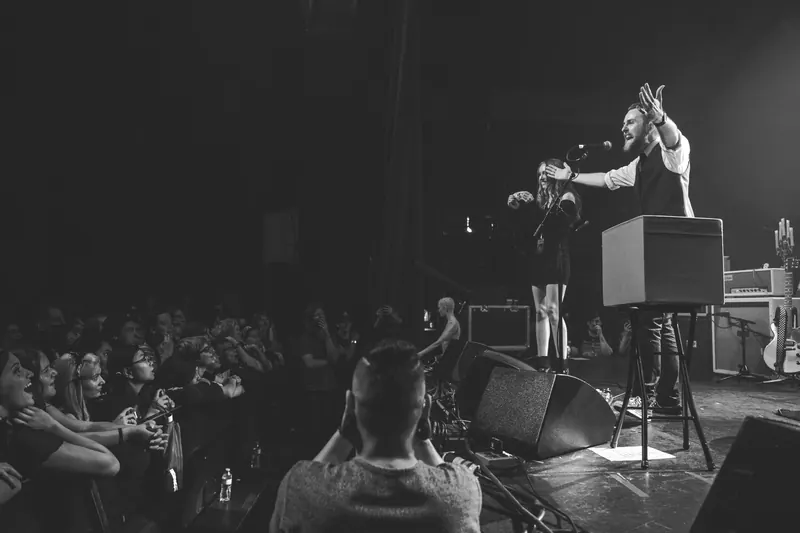
For larger shows, I need a platform and a headset microphone. We should confirm the specific arrangement for your event with the planner and production team. I also care about clear sightlines and keeping the audience close enough to connect with the performance.
A wide empty dance floor between the audience and stage can create distance that looks minor on paper but changes the room’s feel. Review the view from the back tables and from seats near the sides.
For a larger audience, discuss whether live camera projection would help guests follow the action. That production decision needs the appropriate team and equipment. Do not assume an awards screen is automatically ready to show the performance simply because it can display recipient names.
Make cues clear to the people delivering them
A single run of show should guide the coordinator, emcee, audio team, lighting team, and any camera crew. Each person needs to know the cues relevant to their role and who can authorize a change.
Useful cue points include:
- The room settling after meal service.
- The emcee’s introduction and microphone handoff.
- Performance lighting and any screen change.
- The end of the show and return to the emcee.
- The opening of the awards presentation.
- Any change to the order or timing of those segments.
Keep the final version easy to identify. Several conflicting schedules can create uncertainty even when everyone knows their own job.
I would also distinguish the technical check from the live introduction. Audio and staging should be reviewed before the audience is asked to watch. The event team can then concentrate on delivering the program rather than solving basic setup questions during a recognition moment.
Agree on a response if speeches run long
Awards programs can shift as speakers take more or less time than expected. The useful response is a decision process agreed in advance, rather than a hurried request shouted across the room.
Name the coordinator who will communicate with me and the emcee. Discuss which parts of the schedule have flexibility and which moments need to remain protected. Any adjustment to the performance should be agreed directly; do not assume a show can be interrupted or cut at any arbitrary point.
For example, a planner could decide that the coordinator will check the program’s timing before the entertainment introduction. If a change is needed, that conversation happens before the audience is invited to focus.
Keep award recipients out of the production problem. Their moment should not feel rushed because the preceding program was unclear. Good planning cannot remove every live-event variation, but it can establish who makes decisions and how those decisions reach the people involved.
Send the awards schedule with the performance inquiry
Include the ceremony’s purpose, expected attendance, venue, and date. Share the current program even if some details are still being finalized, and identify dinner, speeches, award blocks, and any dancing afterward.
Add the stage plan or a room drawing if available. Tell me who is coordinating sound and lighting, whether a screen or camera team is planned, and who will act as emcee. These details help us assess the performance slot and production needs together.
You can review my videos to understand the performance style while the planning team works through the room and schedule. Both are useful: the style needs to suit the audience, and the production needs to support what guests will see.
To discuss awards ceremony entertainment, send me the program outline. We can look for a suitable window that gives the show its own attention and preserves the evening’s focus on recognition.
Frequently asked questions
Should the magic happen between individual awards?
I would usually look first for a defined performance block rather than repeatedly breaking up recognition. The best order depends on the ceremony. Share the planned award blocks, speeches, and transitions so we can discuss a clear place for entertainment.
Can we use the same microphone as the presenters?
The show’s needs should be confirmed with the production team. For larger shows, I need a headset microphone so I can speak while moving and performing. A presenter’s handheld or podium microphone should not be assumed to meet that requirement.
What if dinner finishes later than planned?
The coordinator should communicate the change before the performance introduction. Review the available timing options together, with meal service and the awards program in mind. Any revised performance arrangement needs direct agreement rather than an assumption that the original show can simply start amid service.
Where to next
See the work, or read more notes.