Weddings and cocktail hour
Wedding Mentalism: Where It Fits in the Day
Considering wedding mentalism? Find a comfortable place for mind-focused entertainment around your guests, music, formalities, and time together.
In this article
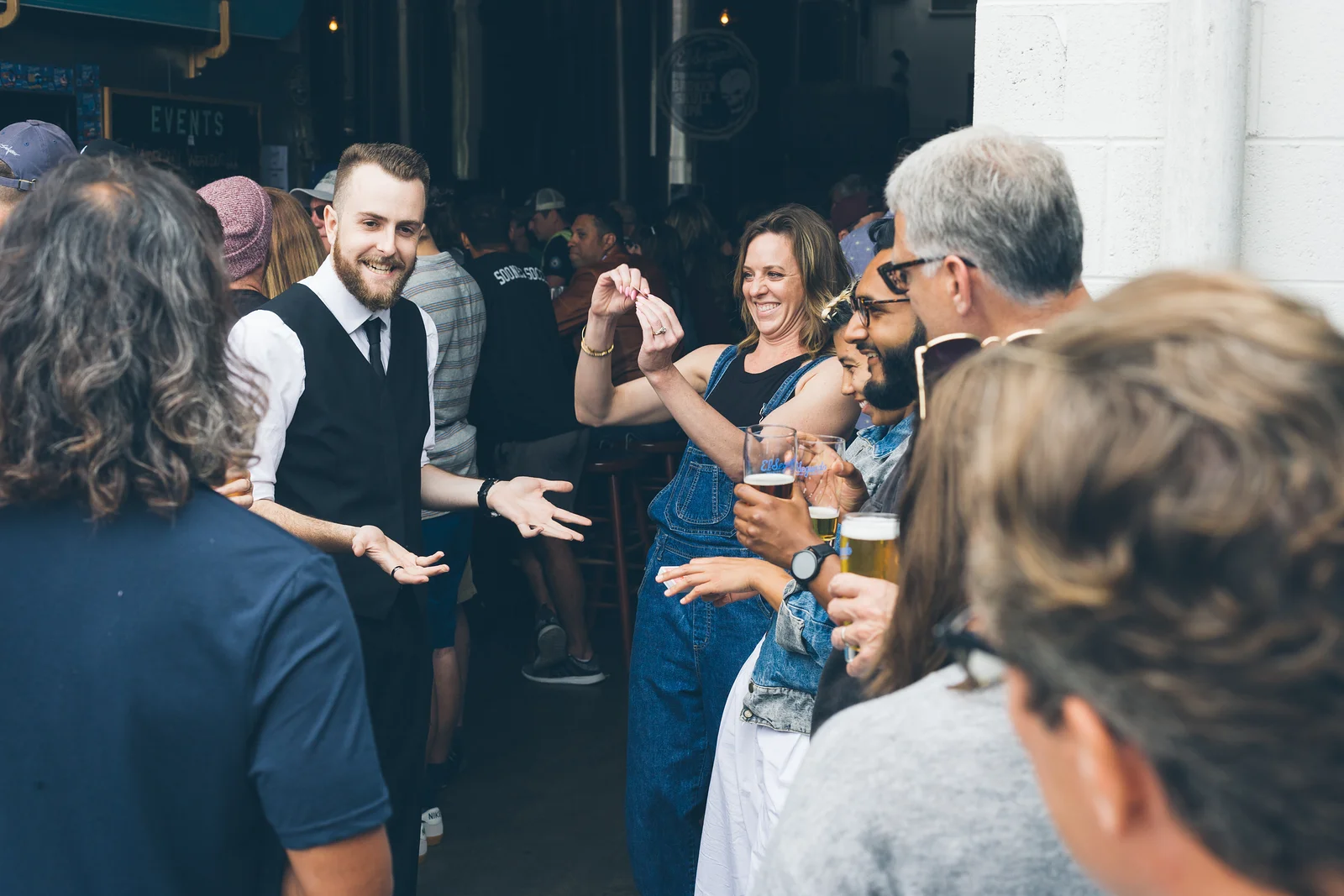
Wedding mentalism can fit a celebration when guests have time to enjoy a conversational, mind-focused performance. I mix magic and mentalism in my work, so you can discuss that interest as part of your wedding entertainment. Start with how you want the day to feel, then consider sound, guest comfort, and your schedule. The aim is to give the performance a natural place alongside the moments you have already planned.
Decide what appeals to you about wedding mentalism
Perhaps you enjoy the feeling of following a mystery together. Perhaps you have seen mind-focused entertainment and like how much conversation it creates within a small group. Those are useful preferences to share, because they describe an experience rather than a checklist of particular effects.
Mentalism is theatrical entertainment centered on the mind. It should not be introduced as psychic advice, a test of your relationship, or an opportunity to reveal guests' private information. At a wedding, the tone of that introduction matters as much as the label.
I have long mixed magic and mentalism in my performances. Tell me which aspects interest you most and what you picture your guests enjoying. We can then discuss the performance in relation to your celebration, including how much direct interaction you and your guests would enjoy.
Picture the guests who will be watching together
Wedding groups can include childhood friends, relatives, coworkers, and partners meeting one another for the first time. A shared entertainment moment gives them something outside the usual introductions to notice and discuss.
I approach wedding magic as an icebreaker. Bringing people together around a performance can create a starting point for conversation. It should still feel like an invitation. Someone who prefers to watch quietly does not need to be drawn into the center of the group.
For example, a couple could mention that their friends enjoy interactive entertainment while some relatives prefer observing. That helps explain the audience without assigning personalities to individual guests. I would avoid a briefing that identifies someone as the skeptic to challenge or the shy person to surprise. Guests can enjoy different levels of involvement while sharing the same moment.
Find a social window with enough listening space
For mind-focused material, guests may need to hear the setup and follow a conversation. Look for a part of the day when they can give that attention without missing something else important.
The social period after the ceremony can offer that opportunity, depending on your plans. Later, after speeches and formal dances, some celebrations have another suitable window. These are possibilities to discuss, not reasons to squeeze entertainment into every gap in the schedule.
I generally advise against performing while guests are actively eating. Their attention belongs with their meal and the people beside them. I also would not recommend competing with a toast or the couple's entrance.
If your main question is how entertainment fits the earlier reception, my guide to Nashville wedding cocktail hour entertainment explores that part of the day. Here, the additional question is whether guests can comfortably hear and engage with the material you prefer.
Make room for your own experience as a couple
It is possible to plan entertainment for a wedding and then discover that the couple is occupied elsewhere throughout the chosen window. Portraits, greetings, and travel between spaces all affect the time you can actually share with your guests.
I recommend deciding early how important it is for both of you to see the performance together. If it matters, tell the planner and photographer so we can discuss a realistic moment. That is more useful than assuming someone will find you when the entertainment is nearly over.
For example, a couple could ask the planner to identify a short social window after portraits and before the next formal entrance. The planner can then assess whether that fits the overall schedule. Discuss that window together so it feels like time you can enjoy, with enough breathing room to return to the next part of your celebration.
Match the performance to the music and setting
A wedding can move from quiet conversation to a crowded dance floor within the same room. That change affects what guests can hear and how long they want to stay in one place.
I perform at Nashville events with live musicians and use more visual magic when the setting calls for it. If mind-focused interaction is a particular priority, tell me about the music plan. An earlier window, a calmer area, or an agreed transition may be worth discussing.
Consider these questions when looking at the reception plan:
- Can a small group hear normal conversation in the proposed area?
- Will guests be walking through on their way to dinner or the dance floor?
- Is comfortable seating nearby for people who want it?
- Who will tell the performer when the next formal moment is approaching?
The aim is to choose conditions that support the experience, without expecting guests to work around an inconvenient setup.
Brief the people shaping your wedding day
Your planner does not need a detailed description of performance methods. The useful information is practical: the intended window, where guests will gather, who communicates changes, and when attention must return to the couple.
If later entertainment is being considered, discuss how it relates to music and conversation after the formalities. A fixed close-up setting may be an option for guests who want to gather for a more focused experience; my guide to seated wedding reception magic explains that format.
Keep the couple's preferences at the center of the conversation. You can enjoy theatrical mystery without making it the theme of the entire wedding. To explore a mix of magic and mentalism, share your wedding plans, including the date, location, and the part of the day you are considering.
Frequently asked questions
Can we request mentalism as part of the wedding magic?
Yes. Tell me what interests you about mind-focused entertainment. I mix magic and mentalism in my work, and we can discuss that preference with your audience and schedule in mind. Describe the kind of interaction you enjoy, and we can use that as a starting point.
Will guests have to reveal personal information?
You should think of the performance as theatrical entertainment, not an investigation into guests. I recommend avoiding introductions about exposing secrets or testing relationships. Share any participation concerns during planning so the discussion starts with guest comfort.
Is the dance floor a good place for conversational mentalism?
It depends on the sound and activity around it. When music makes ordinary conversation difficult, spoken material may be harder to follow. Discuss an earlier window or a calmer gathering area if that kind of interaction is a priority.
Where to next
See the work, or read more notes.