Weddings and cocktail hour
Wedding Entertainment for Guests Who Don’t Dance
Plan wedding entertainment for non-dancers with optional close-up magic, comfortable seating and a social space that works alongside the dance floor.
In this article
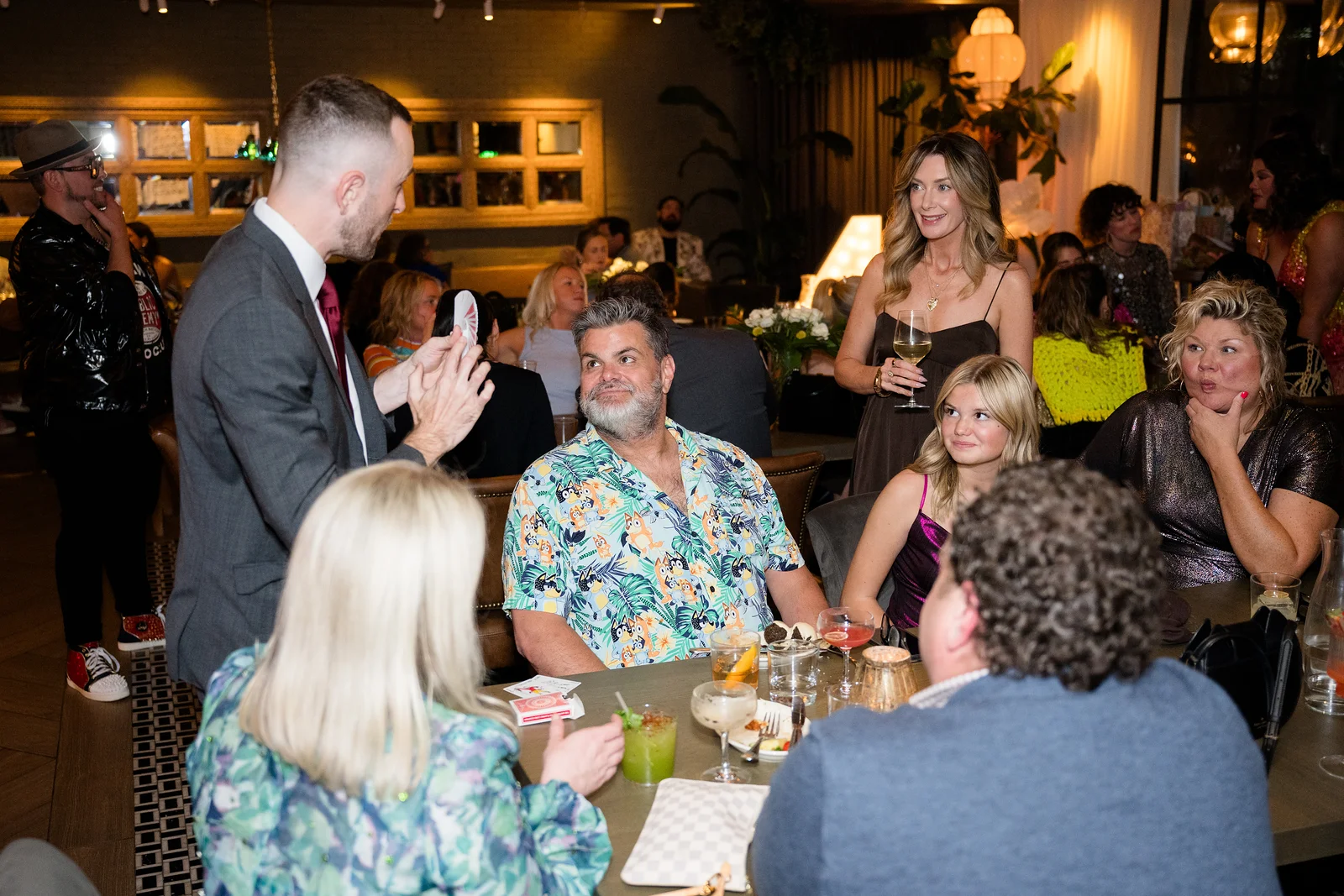
Wedding entertainment for non-dancers works when it feels like another invitation to enjoy the reception. I suggest an optional social space with comfortable seating, enough light to see and sound levels that allow conversation. Close-up magic can fit there after the speeches and formal dances. Guests can join for a moment, return to their friends or head back to the dance floor without feeling that they have chosen a separate party.
Plan wedding entertainment for non-dancers around choice
Someone may love the music and still prefer to stay seated. Another guest may dance for a while, take a break and want something else to enjoy. I would plan around those changing preferences rather than dividing the guest list into dancers and everyone else.
Think of the reception as a few ways to participate in the same celebration. Dancing, conversation and optional magic can each have a place. The goal is to give a guest something inviting to do without implying that sitting down means they are missing the wedding.
Describe the activity in ordinary terms. Guests can come over to watch some close-up magic when they feel like it. They do not need a label, a reason for declining the dance floor or a commitment to stay through an entire block of the evening.
Keep the social space connected to the reception
Location shapes how an optional activity feels. A distant room can be peaceful, but guests may hesitate to leave because they do not know what they will miss. A table directly beside a speaker can keep them close to the action while making conversation difficult.
Look for a location with a clear relationship to the main reception. Consider how guests will find it, where they will sit and how they will return to the dance floor. Ask the planner to check the location at the sound level expected during dancing, not just while the room is empty.
For example, a couple could place an optional close-up table in an adjoining lounge whose entrance is easy to see from the reception. That is a planning possibility, not a requirement. The venue layout, available seating and performance needs should guide the final choice.
Choose how guests will encounter the magic
I perform strolling close-up magic and can also gather guests at a table for a more focused close-up experience. Those arrangements ask different things of the audience. With strolling magic, I approach small groups where they are already socializing. At a fixed table, interested guests come to a known location.
For guests taking a break from dancing, a table can make the invitation easy to understand. They know where the magic is happening and can decide when to join. It also lets the coordinator consider seating and visibility in a specific spot.
Strolling may suit a reception where conversation continues across several nearby areas. Neither arrangement should be chosen only because it sounds quieter on paper. My guide to seated close-up magic at wedding receptions explains the table format; the decision here is how it serves guests throughout the later part of the evening.
Wait until the formalities have a clear finish
I have performed additional close-up magic after wedding speeches and dances. That part of the evening can provide room for an optional experience because guests are already choosing how to spend their time.
Before setting the window, check for later moments that still require everyone together. Cake cutting, a planned group photograph or a farewell can pull people back into the main room. The magic should not make guests wonder whether they are about to miss something important.
Coordinate with the planner and DJ so an announcement comes after the relevant formalities. If there is another shared moment later, give the person coordinating entertainment a clear cue to wrap up or pause as agreed. Avoid competing invitations such as asking guests to join a close-up table at the same time the DJ calls everyone together.
Make comfort part of the invitation
A social space needs more than an empty corner. Check the details from a guest's perspective before deciding it is ready:
- Can someone sit and see without people standing directly in front of them?
- Can guests hear ordinary conversation at the planned music level?
- Is the route easy to find and consistent with the venue's access arrangements?
- Is there enough light to follow close-up magic?
- Can guests join or leave without crossing through the performance?
- Will someone explain where the optional activity is happening?
Ask about specific access needs through the planner rather than guessing from a guest's age or appearance. A quieter space may be useful to many people for different reasons. Keep it available as part of the hospitality of the reception, and avoid language that singles out guests who are not dancing.
Let watching count as participation
Guests do not need to become volunteers to enjoy magic. I treat people respectfully, and when someone is not interested, I move on. That approach matters especially in an optional reception space, where the invitation should feel easy to accept or decline.
The hosts can help by avoiding instructions that everyone must come over or that a particular shy friend has to participate. Let guests discover what interests them. Someone who watches from a seat may be enjoying the moment every bit as much as the person chatting with me.
If this is part of your wedding plan, tell me about your reception. Include where dancing will happen, which formalities come first and what nearby space is available. We can discuss an arrangement that gives guests another way to enjoy the evening together.
Frequently asked questions
Will a second activity pull people away from the dance floor?
Guests already take breaks, talk and move around a reception. Plan the magic as an optional activity after the formalities and coordinate its location and announcements with the DJ. Avoid scheduling a competing all-guest show during a planned dance-floor moment.
Can guests stay seated while they watch?
A seated close-up arrangement can be discussed when planning the room. Visibility, the table setup and space around the audience matter. Share any specific access needs in advance so the seating plan reflects the people attending rather than assumptions about them.
Does this need a completely separate room?
No single layout fits every wedding. An adjoining area may work, while another venue may have a suitable location within the reception room. Check sound, lighting, visibility and the route back to the main celebration before choosing the spot.
Where to next
See the work, or read more notes.