Stage magic and mentalism
Strolling Mentalism: A Guide for Event Planners
Planning strolling mentalism? Learn how mind-focused entertainment fits small groups, guest participation, room sound, and the flow of your event.
In this article
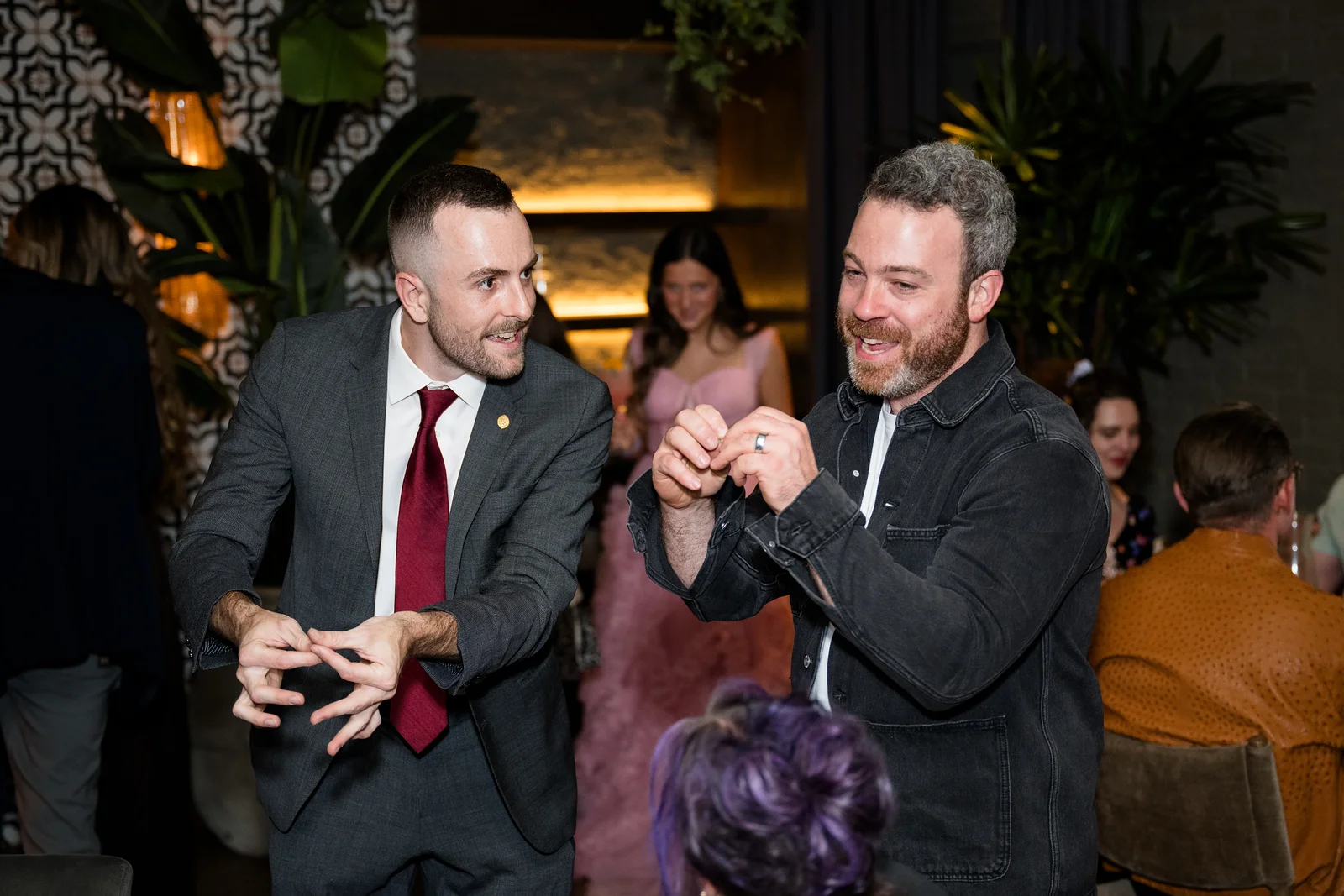
Strolling mentalism brings theatrical, mind-focused entertainment to small groups as people mingle. The strolling part describes the format; mentalism describes the performance content. I mix magic and mentalism in my work, so the useful planning question is how that mix fits your gathering. Guests need room to engage, enough quiet to follow a conversation, and a comfortable way to watch without taking part directly.
What strolling mentalism means for an event
A strolling performer moves among groups instead of asking the entire room to face a stage. Mentalism draws attention toward thoughts, choices, and apparently impossible coincidences as a theatrical experience. It should be understood as entertainment, without a claim to psychic powers or access to private information.
Those two descriptions answer different questions. One tells you where the performance happens. The other helps you picture the kind of curiosity it creates. You can enjoy mind-focused moments close up, and you can enjoy visual magic in that same group setting.
I have mixed magic and mentalism throughout my performing life. You do not need to treat the words as two rigid categories when you contact me. Describe the experience you want your guests to have. That gives us a better starting point than trying to choose a label before we discuss the event.
Start with the conversations you want to support
Think about what guests will already be doing when I arrive. A reception with people meeting over drinks gives small-group entertainment a natural place to begin. A room where everyone is listening to a speaker asks for a different kind of attention.
For example, a planner could place entertainment in an open social period before a company dinner. Colleagues and their partners could watch together, then return to their own conversations. The performance creates something to react to without asking the host to organize a formal group exercise.
I look for opportunities to bring people into the experience, including someone standing outside an existing group. That invitation should leave room for personal preference. A guest may want to participate, watch quietly, or keep talking elsewhere. The point is to add enjoyment to the gathering, not give everyone an assignment.
Give spoken moments a fair chance to land
Mind-focused entertainment often depends on understanding what has been said. If guests miss the setup, they may also miss why the ending matters. A venue can have plenty of space and still be a difficult place for conversation.
I perform at Nashville events with live music, and I use more visual magic when that suits the conditions. That does not mean every piece of mentalism belongs next to a speaker during a loud set. The mix should respond to the room.
Before choosing a location, imagine a small group having an ordinary conversation there. Would someone have to repeat every sentence? Could guests hear one another across the group? If the answer is uncertain, consider an earlier social window or a quieter part of the reception. Share the music plan when we talk so that sound becomes part of the decision.
Choose participation that feels like hospitality
A close-up performance is personal because the people watching are right there. That can make it engaging, but it also means the invitation matters. I do not use crude or lewd humor, and embarrassing someone is not the experience I am trying to create.
I recommend that hosts avoid introducing anyone as the difficult guest, the person who must be fooled, or the colleague who needs to loosen up. Those introductions give an entertainment moment an unnecessary social burden. Introduce people by name and let their interest guide the interaction.
For guests unfamiliar with mentalism, a simple description is enough: theatrical magic with a focus on the mind. There is no need to suggest that personal secrets will be revealed. You can see the general character of my performances in my event videos, which are more helpful than imagining a confrontational challenge.
Plan a route through the actual gathering
The guest total tells only part of the story. People may spread across a terrace, a lounge, and a bar, or gather closely in one room. A moving performance needs a realistic view of where those groups will be.
When reviewing the event, I would look at:
- Where guests settle after arriving and collecting a drink.
- Which routes servers and venue staff need to keep using.
- Where music and conversation are easiest to balance.
- When dinner, speeches, or another shared activity will call everyone away.
- Who can communicate a schedule change on the day.
I prefer having enough time to give groups a personal experience. That is different from promising a fixed number of guests per hour. A room with separate gathering areas needs its own discussion. My guide to strolling performance length explains that timing question in more detail.
Describe the mix you want before deciding the format
Some hosts are most interested in thoughtful, conversational moments. Others picture visible magic that nearby guests can recognize immediately. You can tell me which direction appeals to you without specifying particular effects or writing a script.
For example, a host could explain that the event begins with relaxed conversation, then becomes a louder party. We can discuss the balance of magic and mentalism alongside the changing sound and energy of the room, giving each part of the evening the kind of interaction it can comfortably support.
I am based in Nashville and travel for events. To explore strolling mentalism for your gathering, send me your event details, including the date, location, social window, and what interests you about mind-focused entertainment. I can use that context to discuss how magic and mentalism could fit the occasion.
Frequently asked questions
Is strolling mentalism different from a stage show?
Yes. Strolling describes moving among smaller groups, while a stage show gathers an audience for a shared performance. Mentalism can describe performance content rather than a specific room arrangement. We should choose the arrangement around how your guests will spend their time.
Does everyone need to take part?
No. Some people enjoy participating, and others prefer to watch. If a group is not interested, I respect that and move on. Hosts can help by presenting the entertainment as an invitation instead of selecting guests who must participate.
Can I ask for mentalism alongside close-up magic?
Yes. Tell me that mind-focused entertainment interests you. I already mix magic and mentalism in my work, and we can discuss that preference alongside your audience, sound conditions, and event schedule. Tell me what you enjoy about that style of performance.
Where to next
See the work, or read more notes.