Corporate events
Holiday Party Magic: Build the Run of Show
Build holiday party magic into your run of show with clear arrival, dinner, speech, and dancing transitions, plus a plan for changes on the night.
In this article
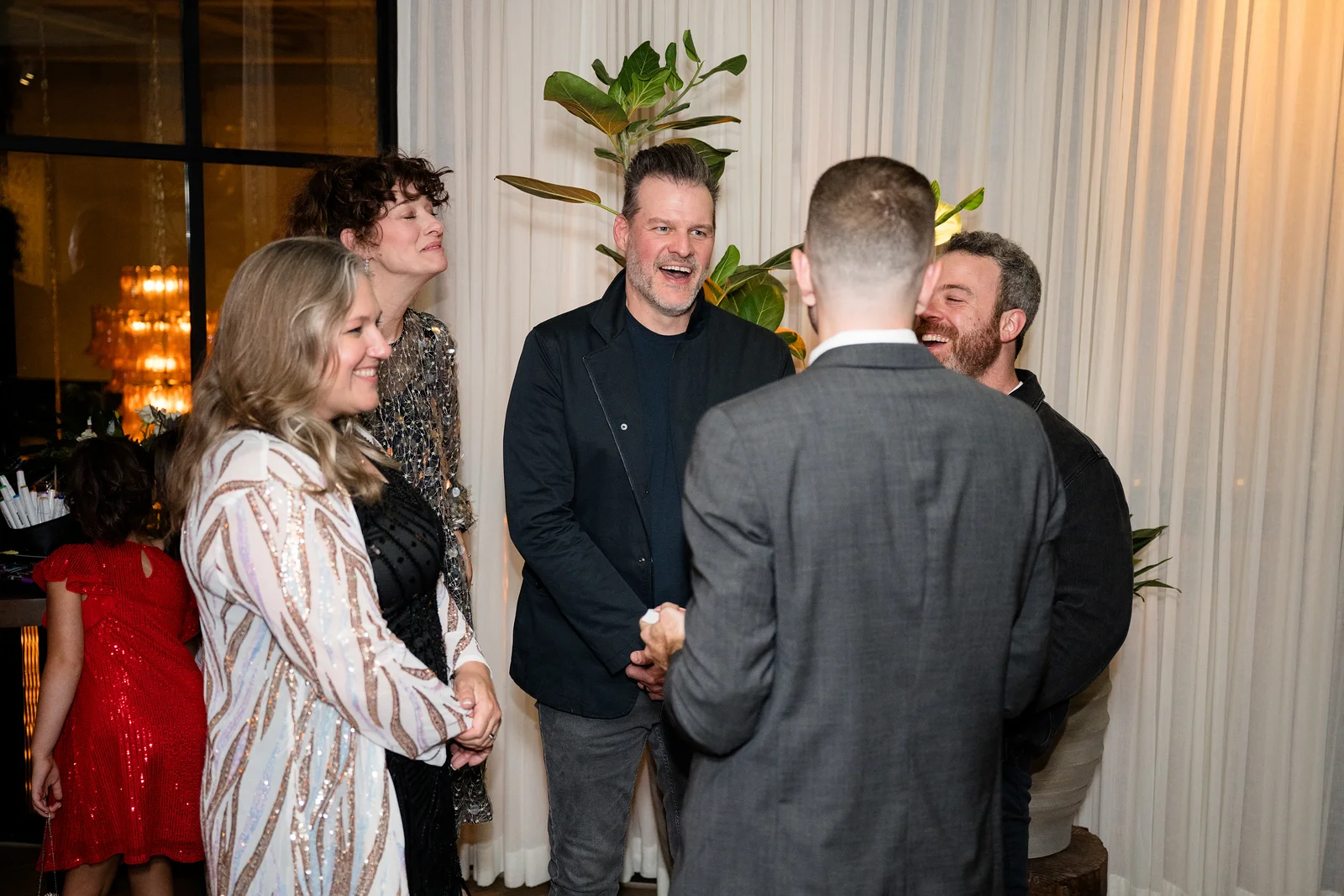
Plan holiday party magic around changes in guest attention. Strolling can fit the social arrival period, dinner deserves its own space, and a gathered show can be discussed for after the meal. Speeches, awards, and dancing need clear handoffs. I like to review the flow of the evening first, then recommend where the entertainment belongs instead of placing it into an arbitrary gap.
Build holiday party magic around the fixed moments
Start your run of show with the parts of the evening that other people depend on. Dinner service, a leadership speech, an award presentation, transportation, and the end of the venue booking may all affect the entertainment window.
Write down which times are firm and which are working estimates. A dinner start can be more consequential than the moment background music becomes livelier. If every item is marked equally fixed, the coordinator has little guidance when the real evening changes.
Then identify the periods when guests are free to socialize. Those are potential homes for strolling magic. If you want everyone to share a show, look for a point when the room can gather and listen.
I commonly discuss close-up magic during a corporate cocktail hour and a stage performance after dinner. Those options should follow the actual structure of your celebration, rather than become a template imposed on it.
Treat arrivals as a period, not a single cue
The invitation may name a start time, but guests rarely arrive as one group. Some will be greeting the host while others are finding the coat area or waiting for a drink. The run of show should acknowledge that gradual change.
For example, a planner could allow arrivals to settle before expecting entertainment to reach established groups. The performer can then work where people are ready to watch, away from the check-in line and service routes.
In the schedule, distinguish the performer's arrival and preparation from the start of guest-facing entertainment. Those are different events. Confirm the arrangements directly instead of assuming that a performance start is also the appropriate access time.
If the social period must end with a call to dinner, identify who makes that announcement and who gives advance notice to the performer. That avoids beginning a new group interaction just as everyone is asked to move.
Give dinner a clean place in the sequence
I advise against placing magic over active eating. Guests are dealing with their meal, conversation, and service, so the performance can become secondary even when people want to enjoy it.
A better run of show makes the transition explicit: social entertainment finishes, guests move to dinner, and the meal takes place. If a shared show is planned afterward, confirm how the room will become ready for it.
Dessert appearing on a schedule does not automatically mean the audience is available. Ask the catering lead when the busiest service activity is likely to finish. Include the room's actual service pattern in the discussion rather than treating the printed meal time as a precise prediction.
For example, a coordinator could use completion of a particular service phase as the signal to prepare the introduction. The exact cue should be agreed with the venue, performer, and person managing the program.
Write the handoff into speeches and recognition
A shared performance needs a clear beginning and ending within the program. Decide who introduces it, where that person will stand, and what immediately follows. The audience should not have to guess whether it is time to keep watching or return to conversation.
If awards follow the show, allow the host to regain the room before recognition begins. If a speech comes first, give the performer a clear cue when the speaker is finished. Avoid building a transition around an assumed speech length without a way to communicate changes.
I recommend that each program entry identify three things: the person responsible, the signal that starts it, and the next destination for guest attention. A line that only says entertainment leaves all three unresolved.
For a larger show, sound and sightlines need to be discussed before the run of show is finalized. Production preparation belongs on the working schedule too.
Protect the shift from program to party
Once dancing begins, the room may become louder and guests may spread into different areas. That is a real change in how entertainment can work, not simply the next row on a schedule.
If more close-up magic is under consideration, discuss where it would happen and how guests would find it. I have worked with DJs who announce where people can see additional close-up magic. A useful announcement needs an agreed location and timing.
You can use this sequence as a planning outline:
- Guest arrivals and relaxed conversation.
- Strolling entertainment during the suitable social window.
- A coordinated move into dinner.
- Any agreed shared show after meal service allows it.
- Speeches or recognition in the confirmed program order.
- Music, dancing, and any separately discussed later entertainment.
Adapt the sequence to your actual meal service and formalities. Remove any element that does not serve your party.
Prepare one workable response to a late schedule
The most useful backup plan names who can make a decision. If dinner runs late, the performer, host, and DJ should not receive three competing versions of the next step.
Choose one coordinator to communicate the current plan. Note which moments must be protected and which transitions can be reconsidered. Discuss changes directly rather than assuming that a booked performance can simply run past the agreed window.
My holiday party entertainment guide offers broader context for the celebration. For the timing question, strolling performance length explains why guest distribution and available time matter together.
When your outline is ready, send me the holiday party schedule. It can be a working draft. The useful starting point is an honest picture of what is fixed, what is flexible, and when guests will have attention to share.
Frequently asked questions
Should the magician perform during dinner to save time?
I generally advise against it because guests are focused on eating and service. Review the arrival period or a suitable point after the meal instead. A crowded program may need a simpler entertainment plan rather than two activities competing for the same attention.
Can a show go before company awards?
That is a sequence I discuss for corporate events, particularly after dinner. The right placement still depends on service, the recognition program, and the room setup. Confirm the introduction, end cue, and transition back to the awards host.
What if the evening runs behind?
Have one coordinator communicate with the performer and other vendors. Identify the essential moments and discuss any adjustment to the agreed plan. Do not assume that moving an item on the printed schedule also changes vendor availability or performance arrangements.
Where to next
See the work, or read more notes.